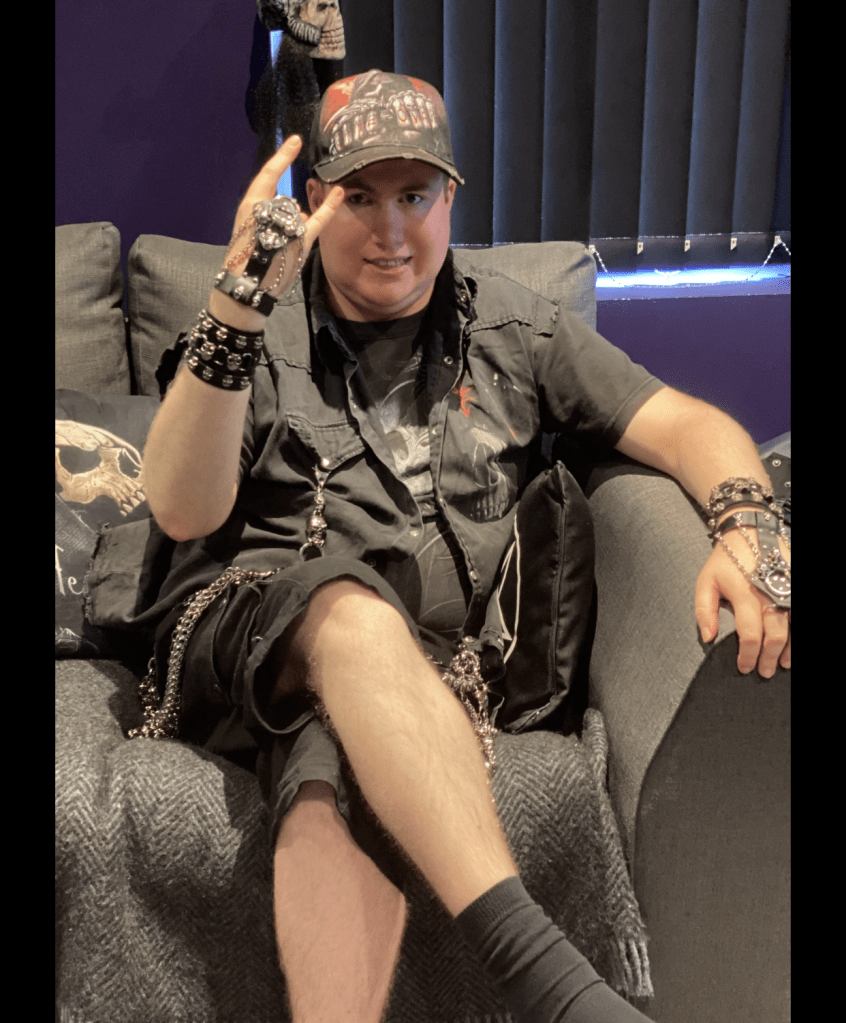
My name’s Callum Stewart, I’m 24 years old, I have an undeniable passion for Metal music, I have a condition called “chromesthesia”- a form of synaesthesia where I am able to associate sounds and musical notes with colours – and I am a childhood brain tumour survivor. I am intending to use all of these as inspiration for my dream career as an Extreme Metal graphic designer. But before we get to that, let’s delve into my life’s story to find out where I came from and where it has all led me today.
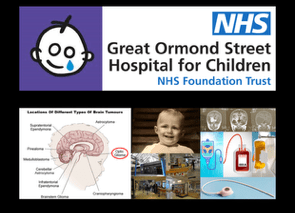
Most of my early childhood (post-9 weeks old) was taken up by being diagnosed with and treated for a brain tumour at Great Ormond Street Hospital. It was an optic glioma on the optic chiasm (the cross-point of where the optic nerves go from the back of the eyeballs to the brain) – so basically in a real shitty position that made it totally inoperable. I underwent 15 months worth of chemotherapy at 8 months old to decrease the size of the tumour (along with a 45% chance that I would survive this ordeal). Shortly after completion, the tumour did shrink down but it produced so much cystic fluid in the process that half my brain was almost completely squashed. To counteract this predicament, I had a shunt implanted into the right-hand side of my skull to aspirate any excess fluid – and it still remains within me to this day as they deemed it safer to keep it in (at the time, anyway) if ever any more cystic fluid were to appear in the future.
Aside from the aforementioned, because my tumour was also situated near the hypothalamus and pituitary gland, it constantly messed with my hormones which affected my growth, sleep patterns, appetite and so on.
2 years onwards and (SURPRISE! SURPRISE!) my tumour started growing again. I underwent radiotherapy the following summer at the Middlesex Hospital in London; a place that was a decrepit facility with often-malfunctioning lifts and was riddled with cockroaches (EEK!).
Thankfully, the staff there were really supportive and did everything they could to ensure that my time with them was as pleasant as possible. By the time of completion after 6 weeks, the tumour had been successfully shrunk to a much smaller size – and would remain so long after with no more (unwanted) future surprises.
While all of this may have helped in saving my life, what it did NOT come without was a suitcase full of side-effects from the collateral damage my brain had received from treatment – besides my eyesight which had already been compromised (and, no, glasses didn’t work for me later on in life).
This included impaired hearing due to the toxic nature of the chemotherapy drugs and, with what I received later during radiotherapy, damage to the frontal lobe which deals with processing information, organisation and so on – along with having some of my hair cells burnt off (leaving a significant bald patch on the right-hand side of my head). This is what people within the medical field call an “acquired brain injury”.
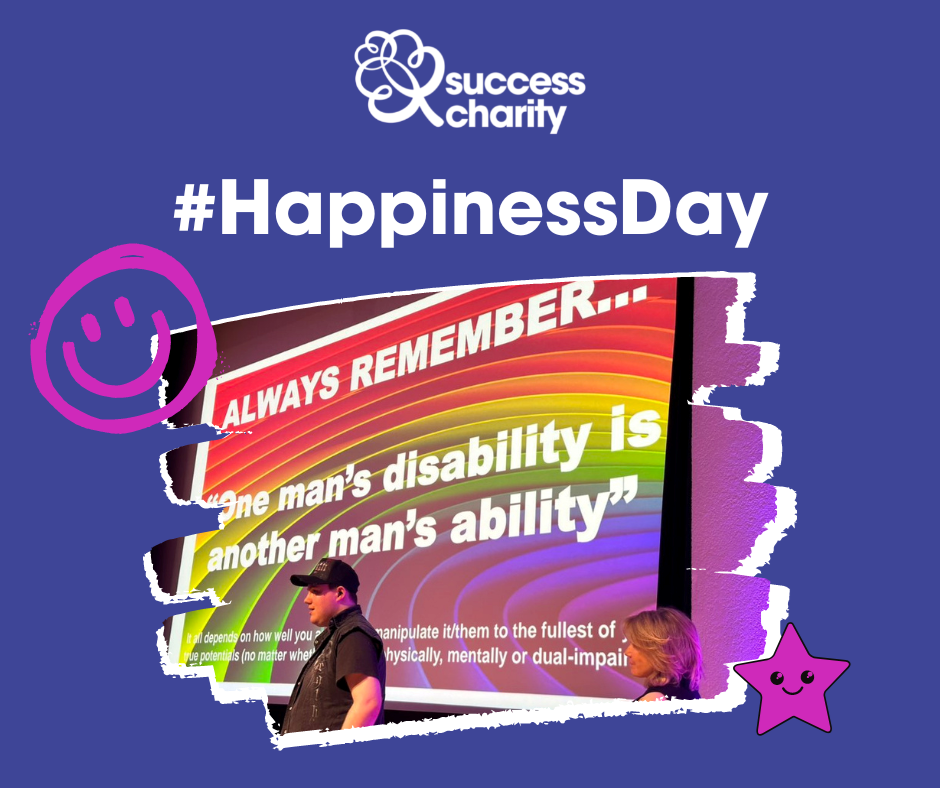
Despite all of this, however, I still managed to make it through mainstream school, got 5 GCSEs and went through both college and uni – where I did 3 courses over a 5-year period (including a Foundation Degree Graphic Design course in Higher Education during my final 2 years) – which just goes to show that being disabled doesn’t always mean that someone can’t unlock new potentials and abilities hence my phrase “One man’s disability is another man’s ability”.
In my current day-to-day life, while I am highly-functioning despite my disabilities, I do require assistance from other people whenever/wherever necessary. For example, although I say I can see clearly, there are times that I will need someone to read and/or make out something that is beyond my field of vision such as small print, minor details or something that’s far away.
Another thing regarding my vision is that I was completely blind in my right eye up until sometime after radiotherapy treatment where a lot of pressure was taken off my optic nerves. This meant that I was fully dependent on my left eye to make sense of my surroundings from an early age and this is still the case to this day.
While my sense of hearing isn’t what I would call very severe, l am totally dependent on hearing aids which give me a better audial range and help me to hear things much clearer. However, I am not able to cope with in situations/places where it is too loud for me to hear anyone – and, yes, this includes Metal concerts. The other reasons why I wouldn’t go to one are that I would not be able to cope with being in claustrophobic areas such as tightly-packed crowds or moshpits, getting bumped into by other people, being sprayed with something or having something spilt on/all over me and I personally prefer a band’s music when being performed for a studio album.
My mental health and physical abilities have also been greatly affected by all of this as I need time and patience – though dependant on the situation – to complete certain tasks and cannot be rushed, have had trouble making new compadres later on in life due to the complexity of my acquired brain injuries and, as of more recently, have been suffering from social deprivation and depression due to a lack of people who are of my demographic and/or are a childhood brain tumour survivor themselves (plus a lack of anything that is of my interest) within a rural environment. I really yearn for face-to-face socialisation as doing it via computer/iPhone just isn’t exactly the same.

Despite all of the above, I have a great sense of humour, love nothing more than having a good laugh and discussing all things Metal (obvs).
Having had an ear for music from an early age – despite the ironic twist being that my sense of hearing is one of my physical disabilities -, my discovery of Heavy Metal (along with all of its subgenres and fusion genres) changed the way I viewed melodies or symphonies of any kind forever. What it was about Metal music that sparked my interest in it was how I found the riffs produced by an electric guitar to be REALLY catchy, the drums that gave songs a good beat and – my most favourite part – the deafening guitar solos that totally blew me away.
My first encounter with Metal music was shortly after I discovered YouTube at around 8 years old and came as background music from videos of water slides, rollercoasters and other thrill rides (both real-life and created on the game “Roller Coaster Tycoon 3”).

A song featured in the background of one particular video was called “96 Quite Bitter Beings” by Camp Kill Yourself (CKY) – an Alternative Metal band from Pennsylvania, U.S.A – and when I saw the official music video for the song, it’s heavy riffs and epic guitar solos were enough to make it a total game-changer in my understanding of what makes awesome music. Soon after, 2 other song tracks – “Fuel’ by Metallica and “Bodies” by Drowning Pool – joined in from RCT3 death slide videos on YouTube and a little later, 3 more.
The first of which was suggested by a friend, “Down With The Sickness” by Disturbed, the second from a video of the steel rollercoaster Goliath at Six Flags Magic Mountain, “Goliaths Disarm Their Davids” by In Flames and the third from a 1999 live version of “Wherever I May Roam” by Metallica which was featured in the background of a YouTube video about a prototype hypersonic plane.


While all of this seemed to indicate that my musical taste was on a straight road towards the further reaches of the Metal scene, I wasn’t a “trve” metalhead just yet as my knowledge surrounding it was still in the embryonic stage. To add to that, I also listened to a few non -Metal songs which included “Ridin'” by Hip-Hop musician, Chamillionaire, along with “Remember”, Devil Inside” and “Dust To Dust” from the 1996 Industrial Rock album “Skold’ by Tim Sköld; a solo artist from Sweden who has since been involved with other bands and musicians such as Shotgun Messiah, KMFDM (Kein Mehrheit Für Die Mitleid – “No Majority For The Pity” in English) and Motionless In White.

Sometime around autumn/winter in 2013, I began searching for new bands/songs and so decided to scrap all of the above that I was listening to at the time because they were just not giving me the same amount of satisfaction like they used to. This, in turn, made way for me to discover new subgenres and fusion genres which would go on to increase my knowledge of Metal music – to the point of becoming my #1 passion when nearing the end of my academics at uni.


Having learned so much from Metal music and its respective subgenres, fusion genres and everything in between has given me inspiration to be a part of it and to express myself as a childhood brain tumour survivor to the extreme. I’ve proven countless times what I am capable of despite the disabilities I had acquired due to both tumour and treatment with really unique abilities that people can find fascinating.
One of those abilities I mentioned earlier is chromesthesia which – over a decade-long course of development from my nursery days to around my mid-teens – allows me to associate sounds and musical notes with colours.
Once I had the necessary computer skills to design a visual representation of what I could only verbally describe in the years prior (nearing the end of my second year of college), I was able to create a single-section piano template where I colour-coded each musical note to visually display what I see when I hear music.

Having learnt musical notes via my music teacher back in primary school and retaining perfect-pitch hearing after the damages my ears received during chemotherapy, the addition of having chromesthesia has allowed me to understand and teach myself about the varying characteristics of music. From being able to immediately identify single notes, heptatonic scales and the strengths of each musical note to narrowing down which of the aforementioned is – in my opinion – most appropriate for Metal music, this has definitely given my 2 physical disabilities (sight and hearing) something to really appreciate in life.

 Heavy Metal Therapy